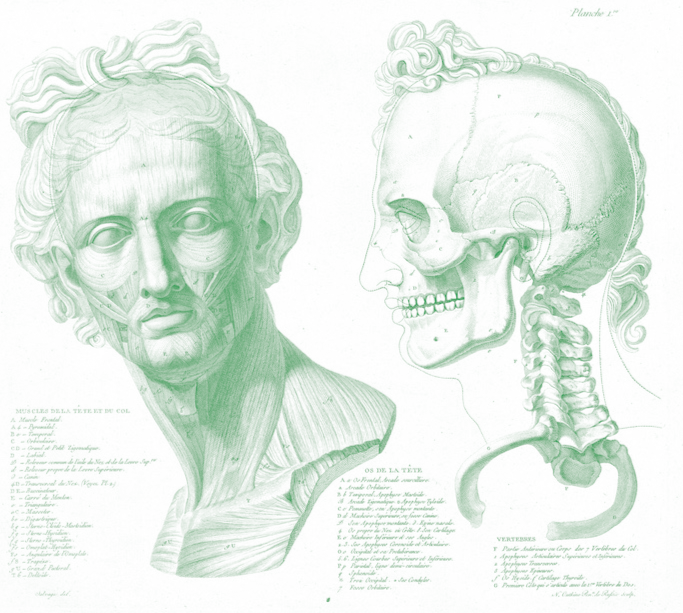
"The art of medicine consists of amusing the patient while nature cures the disease.”

Voltaire

 Control / Group 
A white crescent moon partially visible on a black background.

Your future starts before med school. We believe discovery comes from curiosity, not credentials. The best innovators don’t need letters after their name — they just need a place to start.

We turn ideas into experiments — giving young scientists the mentorship, funding, and tools to do the real science now.

About

Every experiment begins with a standard.

What’s ours?

We match exceptional undergraduates with supervising faculty who serve as the project’s principal investigator. The PI provides lab space, IBC coverage, and mentorship while the student leads the work independently. This partnership gives students institutional credibility and access to the same infrastructure used by professional researchers — turning raw potential into publishable data.

Mentorship


Students work inside their PI’s lab at partner institutions like Pitt, CMU, and UPMC. This model lets us scale quickly and stay compliant — every experiment operates under existing university protocols with full institutional oversight. We coordinate the legal and operational framework that makes those collaborations possible, from IBC filings to IP agreements.

Lab Space


Each project begins with a $10K microgrant — enough to generate early results, attract faculty interest, and qualify for the external funding that will largely fund the project. Control Group manages the administrative backbone that follows: compliance, budgeting, subawards, and incorporation. As a SAM.gov-registered research partner, we receive a 5–10% share of awarded grants, creating a feedback loop that sustains the studio.

Grant Writing


Every funded project is incorporated at inception, with Control Group holding a 40–50% equity stake in exchange for providing infrastructure, funding, and compliance support. This investment helps secure larger grants, prepare publications, and position each venture for further investment or licensing. The model compounds naturally: more data, more funding, more companies.

Commercialization


Have a question?

FAQ

We planted the model. It took root.

Our first project secured $50K in research funding and set the stage for $350K in investment — living proof that the model could scale naturally.

Diagram showing the Earth's orbit around the Sun with labels for the Earth, orbit, and Sun.
PROJECTS
A small, solitary tree on a grassy field with a dense forest in the background, mist or fog creating a serene and peaceful atmosphere.
UPMC and University of Pittsburgh School of Medicine logos